Blog
Recent Articles
Discover the latest news, tips and use cases from our service.
You will find technical description, some interesting facts and how to use our service to get the most of tools we offer.
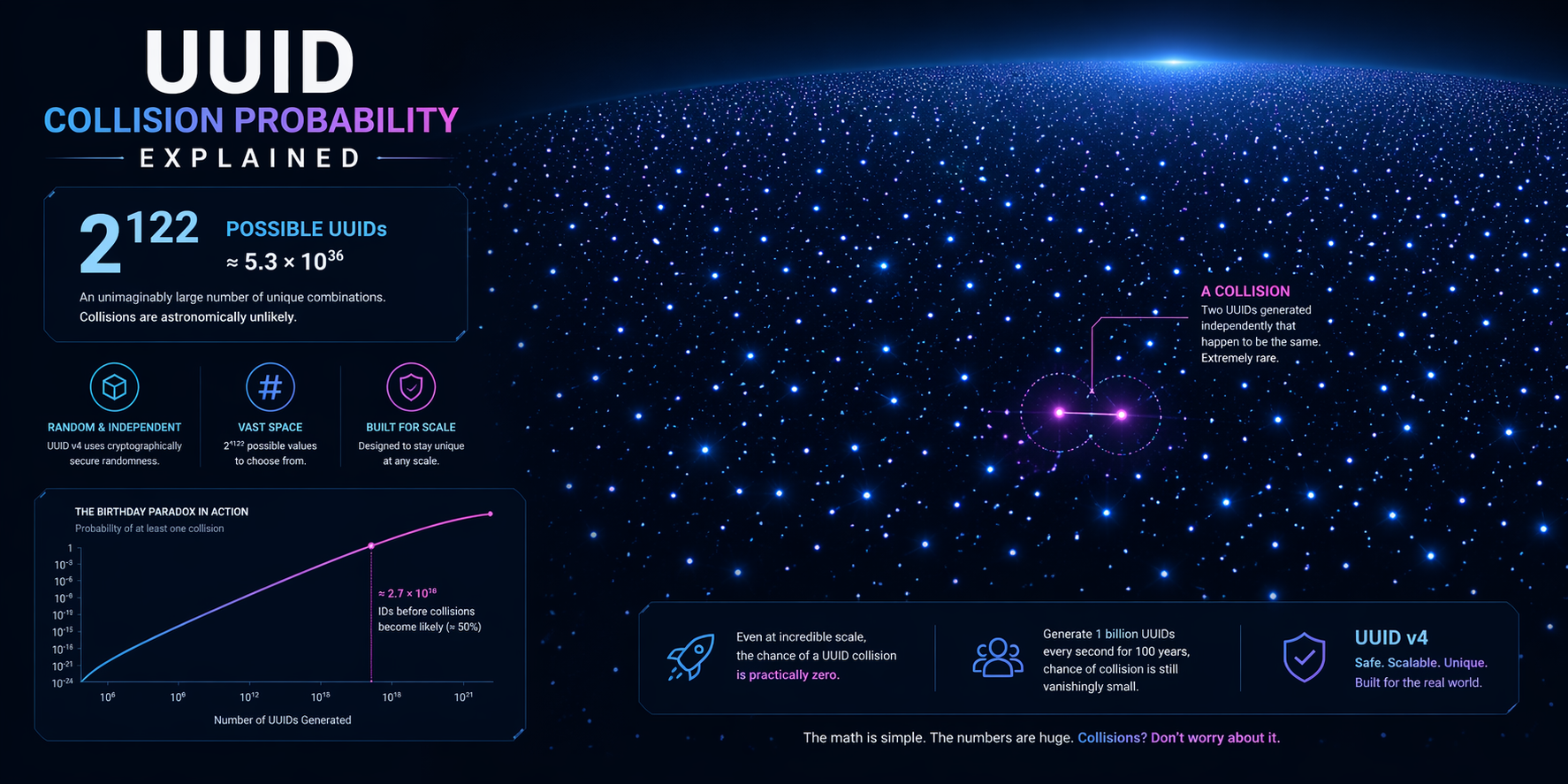
UUIDs are designed to be unique enough for real systems, not magically impossible to repeat. That distinction matters. Teams often hear that a randomly generated identifier is “basically unique,” then stop thinking about failure modes. In practice, the real question is not whether duplication is theoretically impossible, but when it becomes operationally relevant.
A collision happens when two separate objects receive the same identifier. With properly generated random UUIDs, that event is extraordinarily rare. Still, rare is not the same as nonexistent. Engineers need to understand the math, the implementation traps, and the difference between a statistical edge case and a production defect.
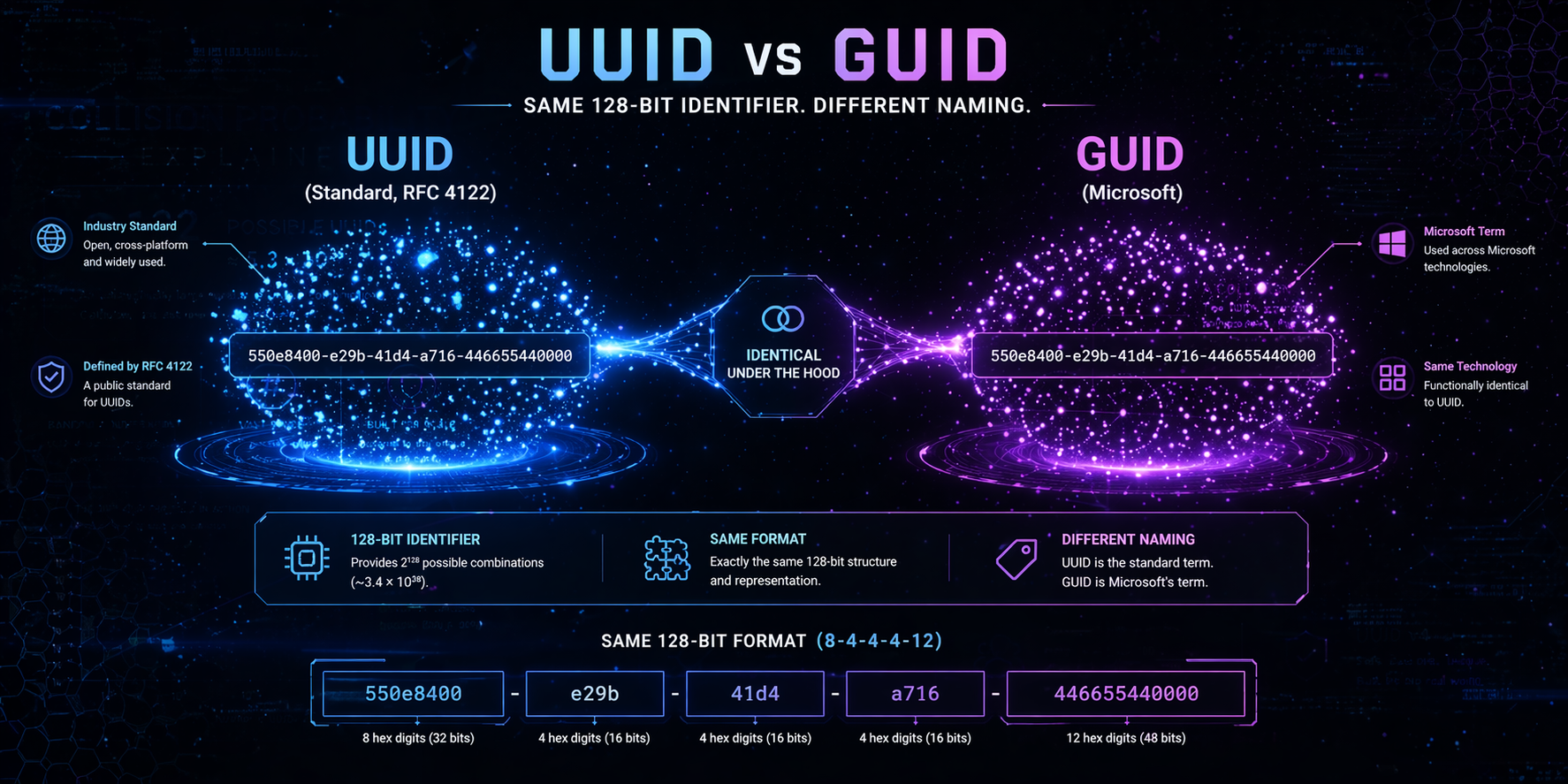
Developers frequently encounter both terms in APIs, databases, distributed systems, and Windows environments. At first glance, they seem interchangeable — and in most modern implementations, they effectively are. However, understanding their origin, specification alignment, and implementation details helps clarify when terminology matters and when it does not.
This guide explains the structure, standards, and practical considerations without repetition or vague statements — only technically relevant distinctions.
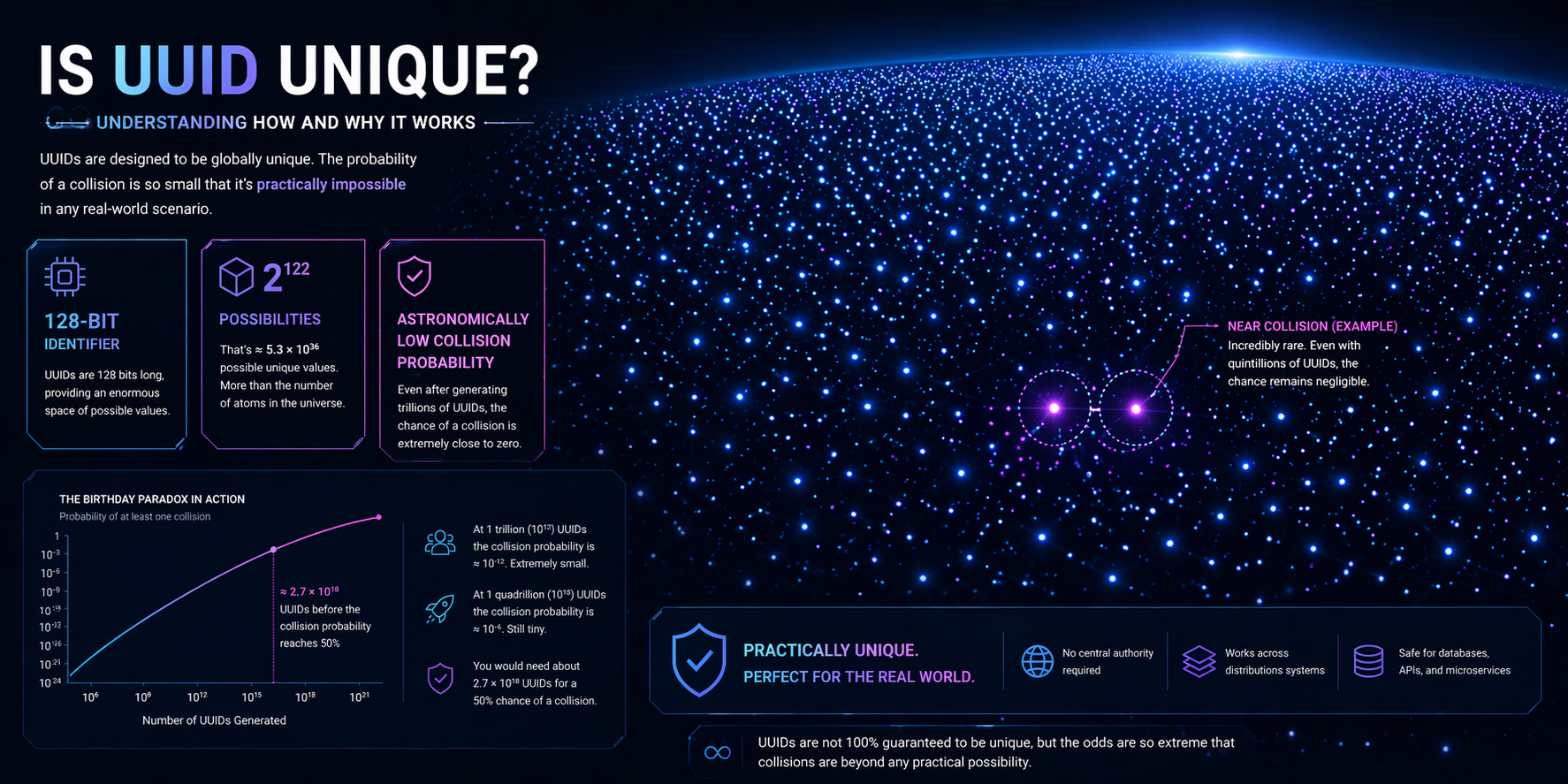
Universally Unique Identifiers (UUIDs) are widely used in distributed systems, databases, APIs, and microservices to identify entities without central coordination. Developers rely on them to avoid collisions across machines, regions, and even time periods. But does a UUID truly guarantee uniqueness in practice, or is that assumption overstated?
This article provides a technical, example-driven explanation of how UUIDs work, where their guarantees come from, and under which conditions problems such as a duplicate UUID may theoretically appear.
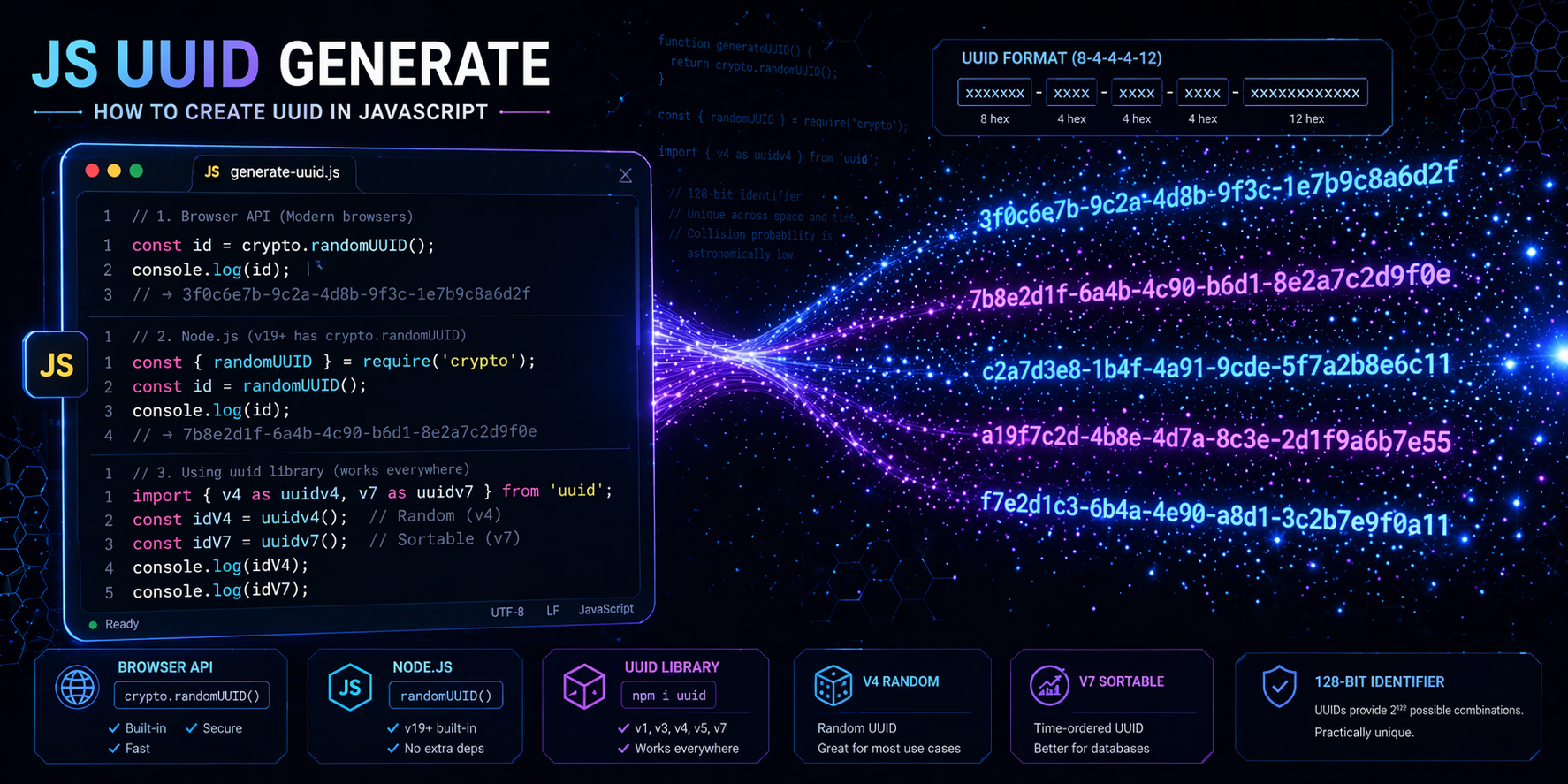
Unique identifiers are essential in modern applications. They help distinguish objects, sessions, database records, and distributed system events without collision. A Universally Unique Identifier (UUID) solves this problem by generating identifiers with an extremely low probability of duplication.
In this guide, you will learn practical ways to create unique identifiers in JavaScript using native browser APIs, external packages, and manual implementations. The examples are suitable for frontend and backend environments.